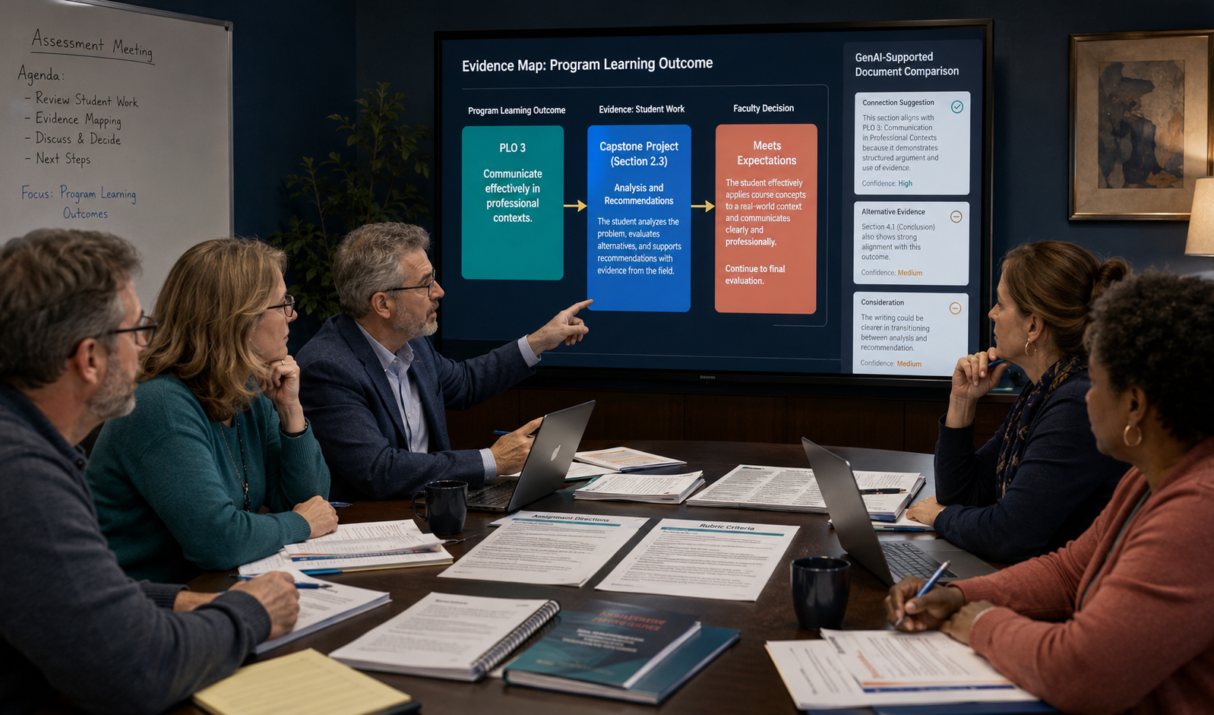

Use GenAI to build a source-grounded evidence map that connects program learning outcomes to actual student work without mistaking course grades, assignment titles, or AI summaries for evidence of learning.

You answer the same question for the fifth time this week. Someone asks where the onboarding checklist lives, another person needs the latest travel policy, and a manager wants the correct training request process. The answers exist, but they are scattered across SharePoint folders, old emails, and "I think this is the right file" messages.

You know what you want to say, but the idea refuses to arrange itself into sentences. Maybe you’re preparing for a difficult conversation, choosing between two options, or trying to explain a half-formed project. Typing feels slow because your thoughts are arriving faster than your fingers can organize them. So you keep rehearsing the same fragments in your head.

AI is getting better at understanding ordinary language, which means the next advantage won’t come from finding the “perfect prompt.” It will come from giving the model the right context: a clear goal, the intended audience, reliable source material, strong examples, practical constraints, and a well-designed workflow. This infographic explains the shift from less prompt engineering to more context engineering, with practical examples that show how richer task setup can produce clearer, more relevant, and more usable results. The question is changing from “How should I phrase this?” to “What does the AI need to do this well?”

You open Outlook and see the same decision request in three places. One person sent the budget question by email, another added context in Teams, and a manager dropped a spreadsheet link with no explanation. Now you are trying to figure out what is being requested, who needs to approve it, and what the actual decision is. By the end of this article, you will know how to use AI to turn messy approval requests into clean, decision-ready briefs your team can act on faster.

It's Tuesday afternoon and your team just wrapped a 45-minute strategy meeting. Three decisions were made, two people were assigned action items, and one critical deadline was agreed on but by Thursday morning, two teammates remember it differently, one person didn't know they had an action item, and the deadline is already slipping. Sound familiar? This week, you're going to learn how to make AI attend every meeting with you, capturing every decision, every action item, and every key insight automatically so nothing ever falls through the cracks again.
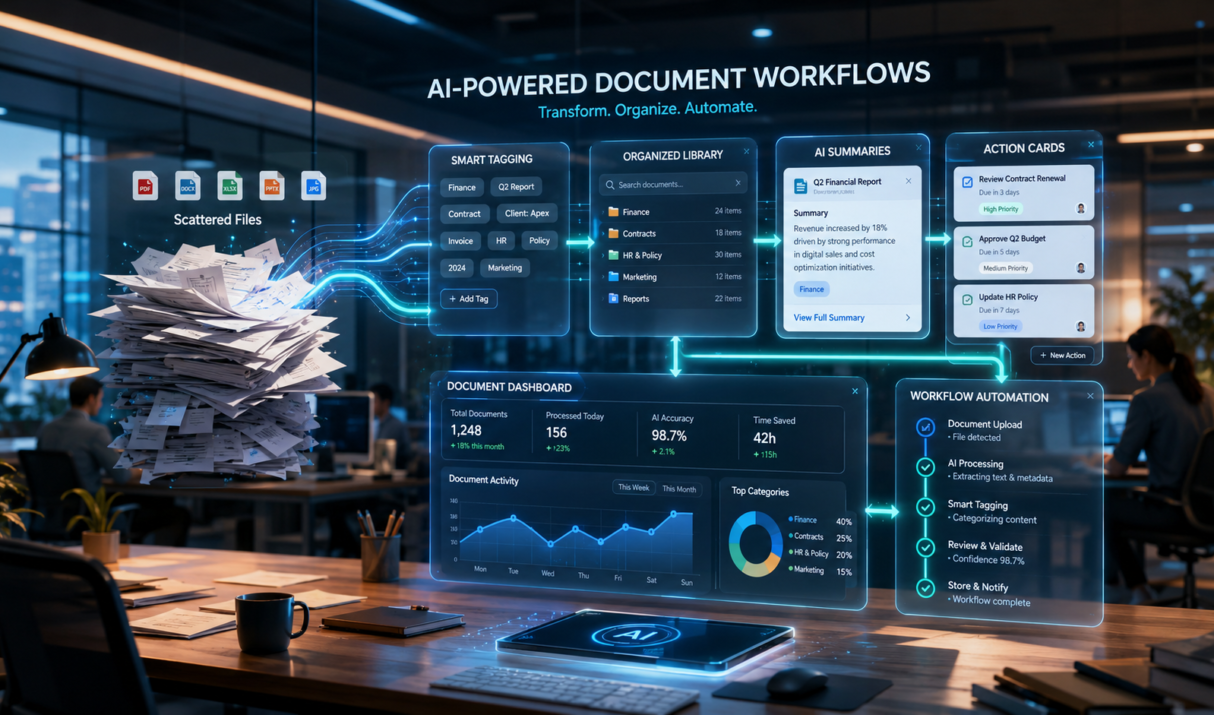
Most teams are not short on information. They are drowning in scattered files, duplicated notes, and documents nobody can find when they actually need them.
This week's workflow focuses on a growing trend in business automation, using AI to organize, summarize, and route documents automatically so teams spend less time searching and more time acting.

Assessment improvement does not happen because a report is submitted. It happens when faculty pause, make sense of the evidence, and decide what to change next.

Most automation today reacts after something happens. A form is submitted. A ticket arrives. A task is overdue. A growing shift in business automation is moving from reactive workflows to proactive AI monitoring. Instead of waiting for problems, lightweight AI agents can watch signals, detect risks, and trigger alerts before work slips.

Most assessment teams do not struggle to collect data. They struggle to make sense of it in time to produce a clear, credible report. This week focuses on how GenAI can help organize, interpret, and communicate assessment results without cutting corners on rigor.


Weekly reports often start with good intentions and end with copy-paste fatigue. Data lives in dashboards, but the story still depends on someone stitching it together. This week is about closing that gap using AI to turn raw data into clear, consistent narratives your team can act on.