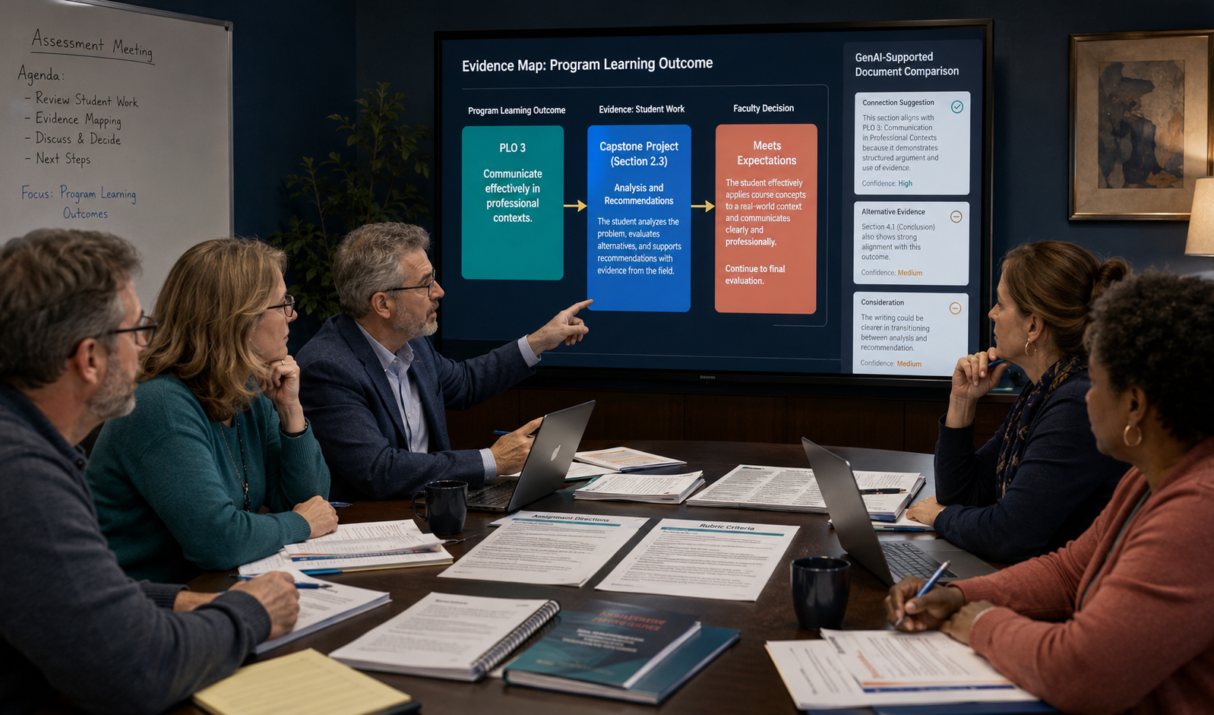

Use GenAI to build a source-grounded evidence map that connects program learning outcomes to actual student work without mistaking course grades, assignment titles, or AI summaries for evidence of learning.

Assessment improvement does not happen because a report is submitted. It happens when faculty pause, make sense of the evidence, and decide what to change next.

Most assessment teams do not struggle to collect data. They struggle to make sense of it in time to produce a clear, credible report. This week focuses on how GenAI can help organize, interpret, and communicate assessment results without cutting corners on rigor.


AI in higher education should not be about replacing human expertise, it should be about amplifying it.

Many departments trust their assignments and rubrics, yet still struggle with inconsistent scoring. This week focuses on how GenAI can support better calibration without taking judgment away from faculty.
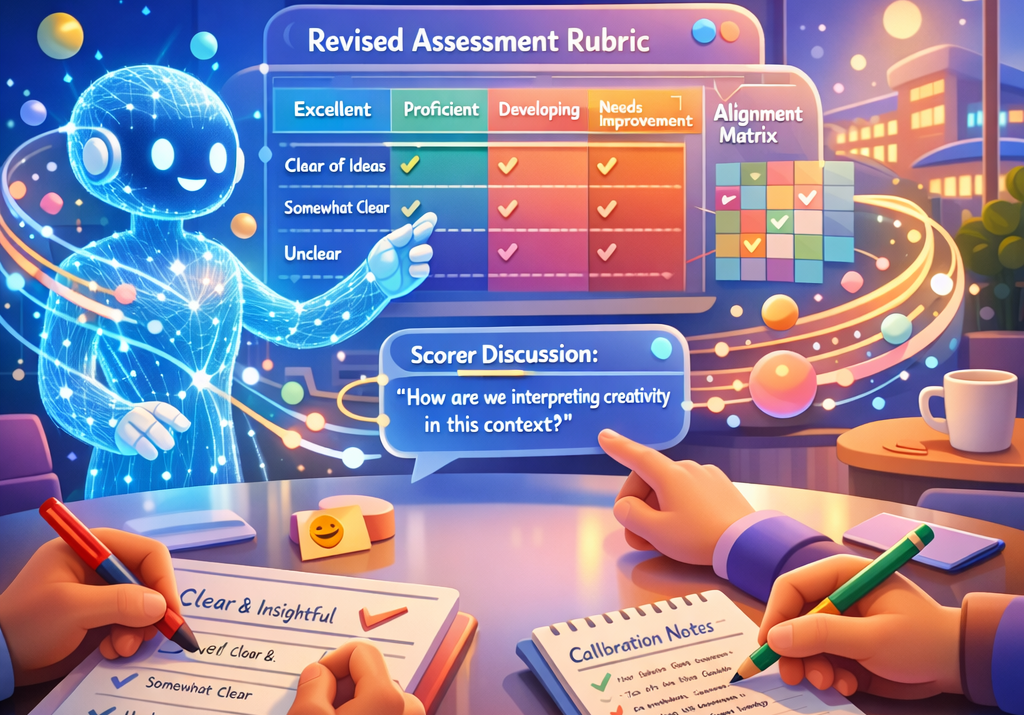
Rubrics are having a moment again, and for good reason. In a GenAI environment, many programs are rechecking what they ask students to do, how they define quality, and whether their scoring language still captures the learning they care about. Audience: Assessment coordinators, faculty leads, and program directors | Mode: Workflow week | Level: Intermediate

Many programs collect solid assessment data but stall when it comes to action. Reports get filed, conversations happen, then momentum fades. This week focuses on a practical workflow that uses GenAI to help translate assessment findings into clear, trackable improvement actions that programs can actually follow through on.

Students now have access to powerful AI tools that can draft essays, summarize readings, and generate solutions. That reality forces a simple but uncomfortable question for higher education. Are we still assessing student thinking, or are we assessing the ability to prompt a machine?

Most programs assume their learning outcomes are well covered across courses. But when you actually map assignments to outcomes, gaps and redundancies appear. This week, we explore how GenAI can accelerate curriculum mapping and help programs see their assessment coverage clearly.

Rubrics are the backbone of meaningful assessment, but building them well takes time, debate, and iteration. This week, we explore how GenAI can help you design, refine, and strengthen rubrics faster while keeping faculty firmly in control of academic standards.