

If AI can draft essays, summarize research, and outline arguments in seconds, what exactly are we assessing when we assign traditional analytic tasks? This week we step into the deep water: how to design and evaluate higher-order thinking—analysis, synthesis, evaluation, creativity—when students have access to powerful generative tools.

Assessment data doesn’t change programs, people do. This week’s post focuses on a practical GenAI workflow for transforming dense tables and fragmented findings into clear narratives and visual summaries that faculty and leaders can actually use.

Most curriculum maps look complete on paper—but still leave teams guessing where learning actually happens. This week’s post shows how GenAI can help assessment professionals turn static maps into living diagnostic tools, revealing alignment gaps, redundancies, and missed assessment opportunities—without replacing faculty expertise.

High‑Impact Practices promise transformational learning—but assessing their impact consistently and equitably remains a challenge. This week’s post shows how GenAI can help institutions evaluate HIPs more effectively without turning meaningful learning into shallow metrics.

Surveys are everywhere in assessment—and so are low response rates, confusing items, and unusable open‑ended data. This week’s post shows how GenAI can act as a survey quality partner before you ever send a link, helping you protect validity, save time, and earn more trust in your results.

Quantitative data may travel fast, but qualitative evidence carries the meaning. This week’s post focuses on a practical, responsible way to use GenAI to analyze, synthesize, and actually use qualitative data, closing a long‑standing gap in mixed‑methods assessment work. 🎯 Introduction Open‑ended survey responses, reflections, focus groups, and artifacts are goldmines for understanding student learning

Most assessment efforts don’t fail because of missing data they stall because teams struggle to use what they’ve already learned. This week’s post explores how GenAI can help assessment professionals move from findings to action more efficiently, without short-circuiting faculty judgment, shared governance, or accreditation expectations.

Learning outcomes are the backbone of assessment—and also one of the most time-consuming, contentious, and quietly frustrating parts of the work. This week’s focus: how GenAI can support (not replace) faculty judgment to make learning outcomes clearer, more measurable, and more useful for assessment—without creating governance headaches or accreditation heartburn.

Rubrics are having a moment—because GenAI is exposing every fuzzy criterion we’ve ever tolerated. This week’s workflow shows how to use GenAI as a rubric debugger: catching ambiguity, improving inter-rater reliability, and tightening validity arguments without turning assessment into a robot uprising.
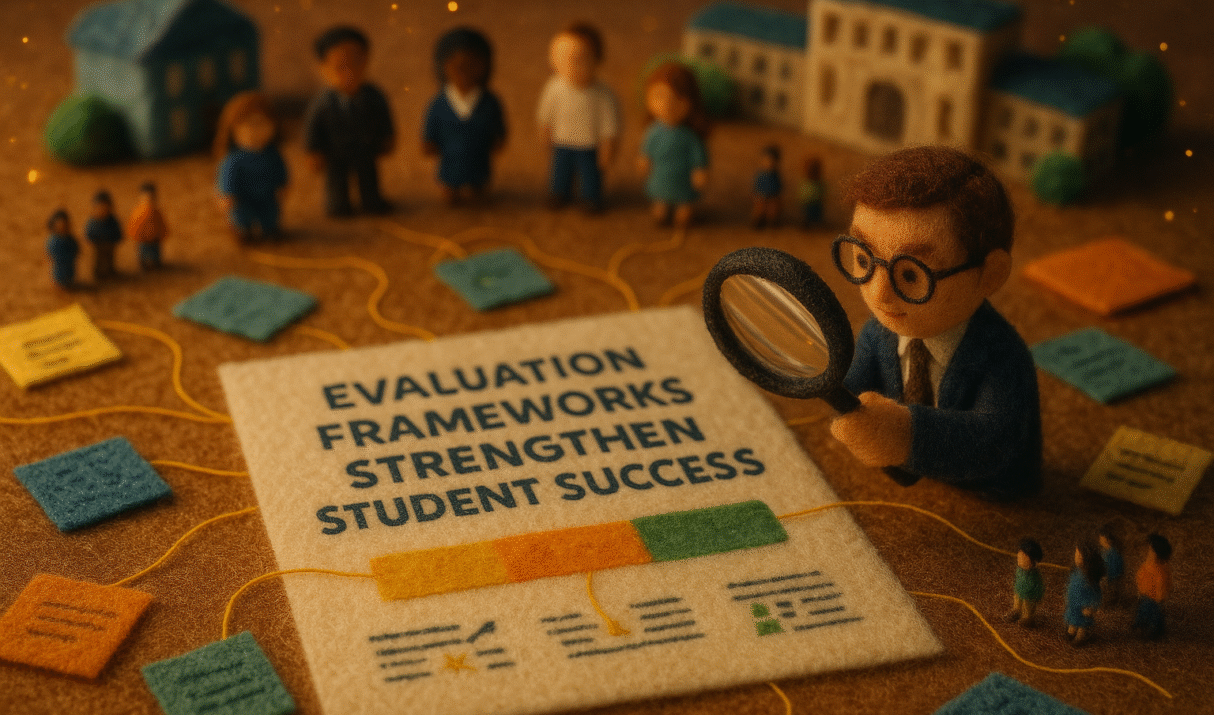
Mentoring programs are some of the most quietly powerful engines on any campus. When they’re built well, they boost belonging, sharpen academic confidence, and anchor students through the wobbliest semesters. When they’re not? They become coffee‑and‑chat clubs with no measurable impact. Today’s post unpacks how to design, evaluate, and continuously improve mentoring initiatives using logic models, participatory approaches, and (yes) a little AI assistance. Whether your institution is launching a new mentoring effort or refining one that’s been around since dial‑up internet, this guide offers a practical, evidence‑informed path forward.

Surveys can be magical—when they’re done well. They can illuminate student experiences, uncover instructional gaps, and give leaders the kind of clarity that spreadsheets alone just can’t offer. But when they’re done poorly? Well… let’s just say a dart-throwing octopus could produce cleaner data. Today’s post walks through the craft of survey design, from defining purpose to validating instruments and turning responses into meaningful insights. Whether you’re designing a quick pulse check or a full accreditation study, these principles will upgrade your approach.

Student success isn’t magic—it’s pattern recognition mixed with thoughtful human intervention. Every campus has students quietly drifting off course long before anyone notices, and the best retention strategies make those signals visible early enough to matter. Today’s blog explores how predictive analytics, mentoring models, and AI-aligned practices can help institutions create more responsive, equitable, and proactive environments. Whether you’re a data enthusiast, an advising lead, or a faculty member who’s noticed “the quiet fade” in your classes, this one’s designed to give you practical, campus-ready ideas.