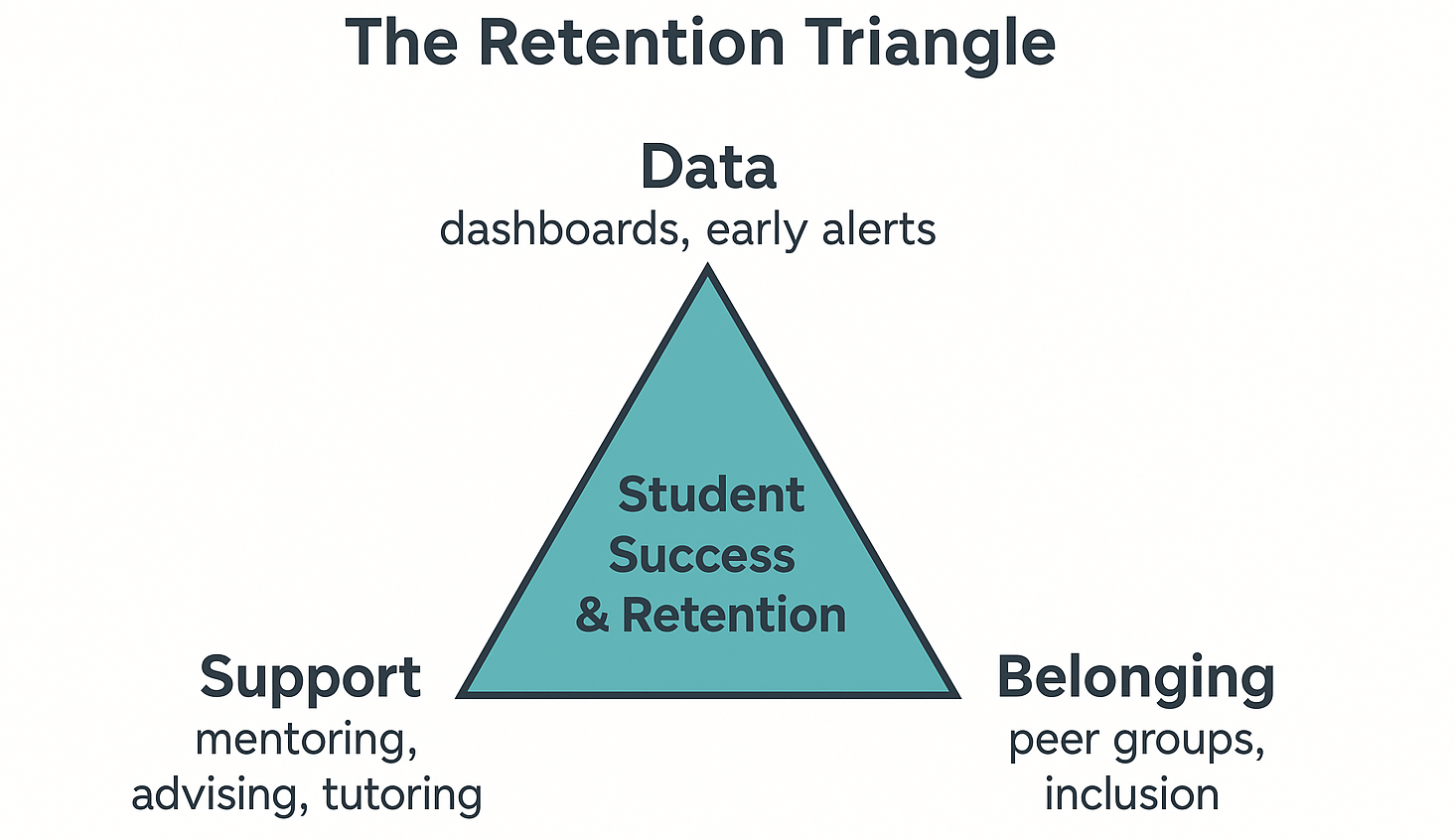
📈 Student Success That Sticks: Retention Through Smart Strategies

Student success isn’t just about keeping seats filled—it’s about helping learners thrive academically, socially, and personally. Retention is one of the most visible (and scrutinized) measures of institutional health, but strategies often fail because they’re scattershot. This week, let’s explore evidence-based, customized strategies that support students where they are—so they persist, graduate, and succeed beyond campus.
💡 Best Practices & Tips
1) Use data, but don’t drown in it 📊
- Tip: Track early indicators: course performance, LMS log-ins, advising visits, and financial aid gaps.
- Mistake: Collecting endless data but failing to act. Data without action is noise.
- Quick win: Develop a dashboard highlighting actionable metrics—who needs outreach, and when.
2) Mentoring matters 👥
- Tip: Pair first-year and transfer students with peer mentors or faculty advisors.
- Mistake: Treating mentoring as optional or unstructured. Students fall through the cracks without accountability.
- Quick win: Build a simple “mentor check-in” system every 2–3 weeks, even if just a 15-minute chat.
3) Faculty as retention allies 👩🏫
- Tip: Train faculty to spot early warning signs—missed classes, poor engagement, silence in online forums.
- Mistake: Assuming retention is only student affairs’ job. Faculty are often the first to notice struggles.
- Quick win: Give faculty a short referral form linked directly to advising or support staff.
4) Curriculum adjustments 📚
- Tip: Identify “killer courses” with high DFW (drop/fail/withdrawal) rates and redesign them.
- Mistake: Blaming students rather than examining teaching methods, scaffolding, or course design.
- Quick win: Add supplemental instruction or embedded tutors to high-DFW courses.
5) Belonging is retention’s secret sauce 🌱
- Tip: Use surveys and focus groups to assess sense of belonging and inclusion.
- Mistake: Assuming that offering clubs and activities equals belonging. Real belonging is cultural, not just programmatic.
- Quick win: Introduce structured first-year experiences where students form small cohorts with a faculty/staff guide.
🏫 Real-Life Example
At a regional state university, retention between first and second year hovered at 64%. A task force discovered two key pain points: (1) high-DFW gateway courses in biology and math, and (2) commuter students struggling to connect socially.
The interventions:
- Gateway redesign: Faculty embedded supplemental instruction sessions led by advanced undergraduates, plus shorter, more frequent assessments to provide quicker feedback.
- Belonging initiative: The university launched “Commuter Communities,” with peer mentors leading 30-minute weekly check-ins over coffee.
The results:
- Retention jumped to 72% within two years.
- Commuter students in the cohort program reported a 20% increase in sense of belonging on annual surveys.
- Faculty noted higher engagement and fewer course withdrawals.
The big takeaway: customized, data-informed strategies created measurable improvements—without massive new budgets.
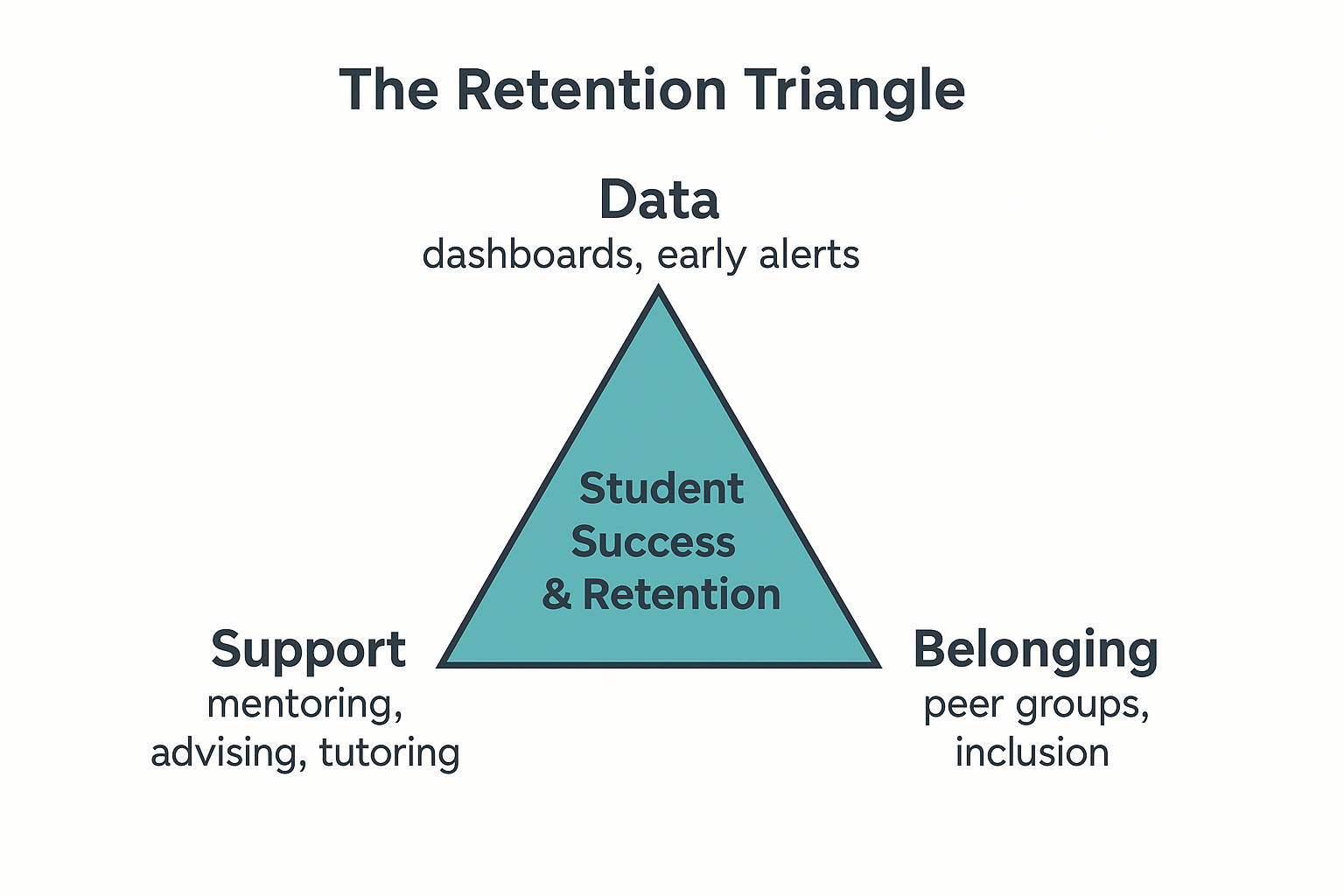
🧭 Takeaway & What’s Next
Student success strategies work best when they’re customized, data-informed, and people-driven. Dashboards without mentors, or programs without belonging, won’t move the retention needle. Success is sticky when institutions align early alerts, meaningful faculty-student connections, and a culture of inclusion.
Next week: 📊 Survey Design Secrets—how to build surveys that go beyond satisfaction to capture belonging, engagement, and culture (without causing survey fatigue).
❓ Question of the Week
What’s one retention challenge on your campus that data alone hasn’t solved—and how could mentoring or belonging strategies bridge the gap?

Dr. Alaa Alsarhan is a higher education leader and analytics expert specializing in assessment, learning outcomes, and data-informed decision-making. He is CEO & Co-Founder of Horizons Analytics, a consultancy advancing AI-powered assessment and strategic planning in education and business. Dr. Alsarhan has authored multiple publications, delivered national keynotes, and led innovative research on high-impact practices, student success, and AI in higher education. He is a founding member of the GenAI in Higher Education Assessment Community of Practice and a fellow with the NWCCU Mission Fulfillment and Sustainability program.
View All Articles